
Table of Contents
Travel Tips: An Essential Planning Guide
So, you’re ready to trade the city lights for the ancient forests and wild coastlines of South Africa? You’ve come to the right place. This Southern Cape Travel Guide is designed to help you navigate one of the most beautiful stretches of road on the planet without the stress of “over-planning.”
Whether you are here for a solo trek or a family road trip, these Travel Tips will ensure your adventure is seamless.
The Ultimate Garden Route Map

The Basics
Although there is no official boundary, the Southern Cape spans approximately 750km (± 466mi) between Cape Town in the East and Gqeberha (Previously Port Elizabeth) in the West. While you could drive it in a day, you really shouldn’t. To truly experience the coastal biomes, you need time to view the unique fynbos, breathe the mountain air and listen to the Indian Ocean.
📅Best Time to Visit the Garden Route
- Peak Summer (December – Mid January): Best for beach weather, but expect crowds and higher prices.
- The “Sweet Spot” (Mid January – May & September – November End): Mild weather.. perfect for hiking the abundant Forest or Ocean trails.
- Whale Season (June – November): Crisp air and cool conditions, althought temperatures are often much milder than the interior. These are the best months to see Southern Right Whales from the shore. If you’re lucky you might even see a live whale in action on this webcam at the Harbour House Hotel.
🎒 The “Adventure-Ready” Packing List
The Southern Cape is famous for having “four seasons in one day.” Use this checklist as a rough guide:
For the Trail:
- Lightweight Backpack to carry your gear.
- Trail Shoes/Boots: A pair with good grip is vital for all trails, some hikes like Robberg and Jubilee Creek have partcularly slippery areas.
- Sun Protection: The African sun is strong; high-SPF sunscreen and a hat are non-negotiable.
- Reusable Water Bottle/Bladder: Certain trails have safe and delicious (often tannin-rich!) drinking water.
- Light Rain Jacket: Essential for the sudden drop in temperature in certain parts of the forest.
- Swimwear: You’ll want this for the rock pools and detours to the beach.
Whale & Dolphin Watching:
- Binoculars: For spotting Southern Right Whales from the shore or on an organised whale-watching tour.
- Bottled Water: Guests often underestimate how quickly they can become dehydrated, particularly when out on the ocean.
- Sun Protection
On the Road:
- Power Bank: For long days spent photographing the wonders of the Southern Cape.
- Slops: South Africans lovingly refer to their sandals as slops. Essential for comfort on hot summer days.
At the Hotel & Around Town:
- Power Adaptor: Most South African plugs use Type M, C, and N connections. Make sure to bring a relevant adaptor to charge your devices!
- Swimwear: Many hotels have excellent swimming pools.
Getting Around: Self-Drive or Guided?
It really depends on who you are. Happy to deal with all the logistics yourself? Then renting your own car is an economical way to do it. Not comfortable driving on the left? Probably best to book a guided tour.. then sit back, relax, and simply focus on the experience.
Still not sure? We compiled an expert self-drive vs private guided comparison on how to tackle the Garden Route.

Where is the Garden Route?
If you’re looking for the heart of South Africa’s natural beauty, you’ll find it stretched along the southeastern coast. The Garden Route is a world-famous coastal corridor that officially runs from Mossel Bay in the Western Cape to the Storms River Mouth in the Eastern Cape.
It covers a distance of approximately 300km (186mi), though many travelers extend their journey from Cape Town to Gqeberha (Port Elizabeth).
🚗Essential Garden Route Travel Tips
- Fly into George (GRJ): If you’re short on time, you can skip the 5-6 hour drive from Cape Town and fly direct from Johannesburg to the heart of the Garden Route. FlySafair is probably your best bet in terms of airlines.
- Respect the Elevation: If you’re driving over the Outeniqua Pass, remember you’ll be climbing to 800m (2,625ft) above sea level. Check your brakes and enjoy the view!
- Pack for Four Seasons: Even in summer, the indigenous forests can get misty and cool. A light rain jacket is your best friend.
The Geography at a Glance
The route is sandwiched between the dramatic Outeniqua and Tsitsikamma Mountains to the north and the vast Indian Ocean to the south. This unique placement creates a “garden” of diverse ecosystems, including:
- Ancient Indigenous Forests: Home to giant Outeniqua Yellowwoods.
- Coastal Lagoons: Such as the famous Knysna Estuary.
- Pristine Beaches: From the surfing mecca of Victoria Bay to the wild shores of Nature’s Valley.
Key Towns Along the Way
While the “wild” parts are the stars of the show, the route is connected by several iconic towns:
- Mossel Bay: Gateway to the garden and site of the historic Post Office Tree – Portuguese sailors left letters in an old shoe and tied it to this ancient milkwood which still stands today!
- George: The commercial hub of the Garden Route and historical timber town.
- Knysna: Famous for its beautiful but deadly Heads, oyster festival, and forest legends.
- Plettenberg Bay: Where the mountains meet the sea in spectacular fashion. Arguably the best beaches in the entire Garden Route. Home to fascinating sparkling wine estates.
- Nature’s Valley: A sleepy coastal forest village – the perfect place to read, write, reflect, and get away from the masses.
- Storms River: The gateway to the Tsitsikamma National Park – described as the land of plentiful water by the indigenous Khoi and San peoples who once roamed these areas.
Why is it called the “Garden” Route?
Contrary to what some may think, it’s not named after manicured flower beds but rather on the ecologically diverse vegetation and numerous lagoons and lakes dotted along the coast. It’s green nearly all year round, thanks to a temperate maritime climate.
Fun Fact: The Garden Route is home to some of the highest rainfall in South Africa, which keeps the indigenous forests lush and the rivers flowing – ideal for adventures of all kind.
Distance & Elevation Context
For our international hikers and road-trippers:
- Total Route Length: 300km (± 186mi).
- Highest Pass: The Outeniqua Pass reaches an elevation of 800m (± 2,625ft), offering panoramic views of the coast below.
National Parks: A Mosaic of Nature
The Southern Cape is host to a number of fascinating national parks, from delicate and diverse fynbos in the west to the expansive forests and Lord of the Rings style jagged coastlines in the east.
Agulhas National Park: The Graveyard of Ships
Agulhas is a place where the landscape feels raw and the history feels heavy. It is the official meeting point of the Atlantic and Indian Oceans. For centuries, this coastline was a nightmare for sailors, and today it remains a place where maritime legends are born.
- The Landmark: Visit the Cape Agulhas Lighthouse, the second oldest working lighthouse in South Africa. Its design was inspired by the ancient Pharos of Alexandria.
- Must-Do: Take the legendary photo at the Southernmost Tip of Africa stone cairn, then walk the coastal boardwalk to the Meisho Maru 38 shipwreck.
- The Flora: This park protects the Agulhas Plain, home to unique “Limestone Fynbos” which you won’t find anywhere else in the world.
- The Vibe: Atmospheric, historic, like standing at the “edge of the world.”
What is Fynbos? (Pronounced: fayn-boss)
Most visitors are surprised to learn they are walking through one of the six Floral Kingdoms of the world. While the Amazon Rainforest is famous for its scale, our Cape Floral Kingdom is the smallest and richest per square meter on Earth.
- The Name: An Afrikaans word that translates to “fine bush.”
- The Superstars: Look out for the “Big Three”- Proteas (the giants), Ericas (the tiny bells), and Restios (the elegant reeds).
- The Rarity: Many of the plants you see in Agulhas are Endemic, meaning they grow here and nowhere else on the planet.
- Limestone Fynbos: Agulhas is specifically famous for its rare “Limestone Fynbos,” which has adapted to survive in the alkaline, rocky soil right against the salt spray of the ocean.
Garden Route National Park
Unique in South Africa, it isn’t just one park but instead a sprawling, unfenced collection of ancient forests, pristine coastlines, and sun-drenched lagoons. Stretching from the Touw River in Wilderness to the Storms River mouth in Tsitsikamma, it offers some of the most diverse biodiversity on the continent.
🚣 The Wilderness Section: The Land of Lakes
Wilderness is a water-lover’s paradise. This section is characterised by a series of interconnected lakes, rivers, and estuaries.
- Must-Do: Rent a canoe and paddle up the Touws River to the Giant Kingfisher trail waterfall.
- Wildlife: Keep your eyes peeled for the Malachite Kingfisher and the Cape Clawless Otter.
- The Vibe: Peaceful, watery, and perfect for a slow-paced morning.
🌳 The Knysna Lakes & Forest Section: The Deep Green
This is the heart of the “Garden.” It includes the massive Knysna Estuary and the vast, mystical Afro-montane forests.
- Must-Do: Visit the Goudveld Forest to see the relics of the 1880s Gold Rush at Jubilee Creek.
- The Giants: This section is home to the Outeniqua Yellowwoods, some of which stand over 40 meters tall and have lived for over a millennium.
- The Vibe: Mysterious, cool, and ancient.
🌊 The Tsitsikamma Section: Place of Much Water
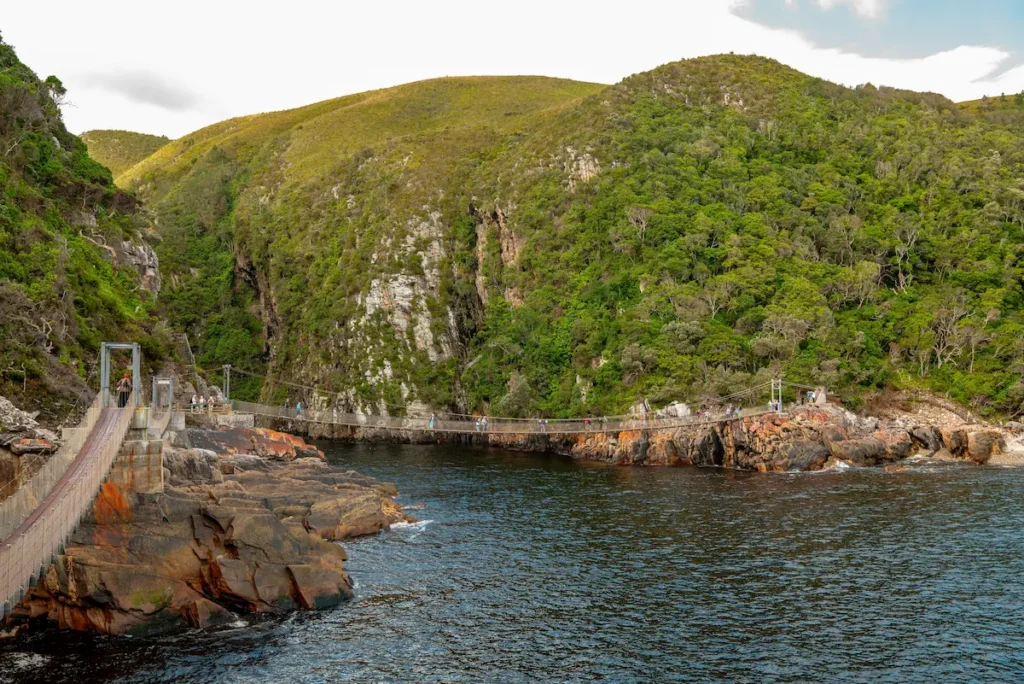
Tsitsikamma is the crown jewel for adventure seekers. It protects a narrow band of forest and a massive Marine Protected Area where the stormy Indian Ocean crashes against towering cliffs.
- Must-Do: Walk the Suspension Bridge at Storms River Mouth or hike the first few kilometers of the world-famous Otter Trail.
- Marine Life: During winter and spring, the cliffs here offer some of the best land-based whale watching in the country.
- The Vibe: Dramatic, wild, and exhilarating.
💡 Practical Info for Visitors
- Conservation Fees: SANParks manages most national parks. You’ll need to pay a daily conservation fee at the gates (usually between R50 – R100). If you have a Wild Card, entry is free.
- Gate Hours: Most sections open at 07:00 and close at 18:00.
- The “Garden Route Plan”: Because these sections are about 60-90 minutes apart, we recommend dedicating at least one full day to each section to truly appreciate the change in scenery.
Wildlife & Nature of the Garden Route
The Garden Route is a living, breathing cathedral of biodiversity. From the floor of the ancient Afro-montane forests to the deep blue sea of the Indian Ocean, every inch of this coastline tells a story of survival and wonder. Here are a few must-see’s when hitting the trail.
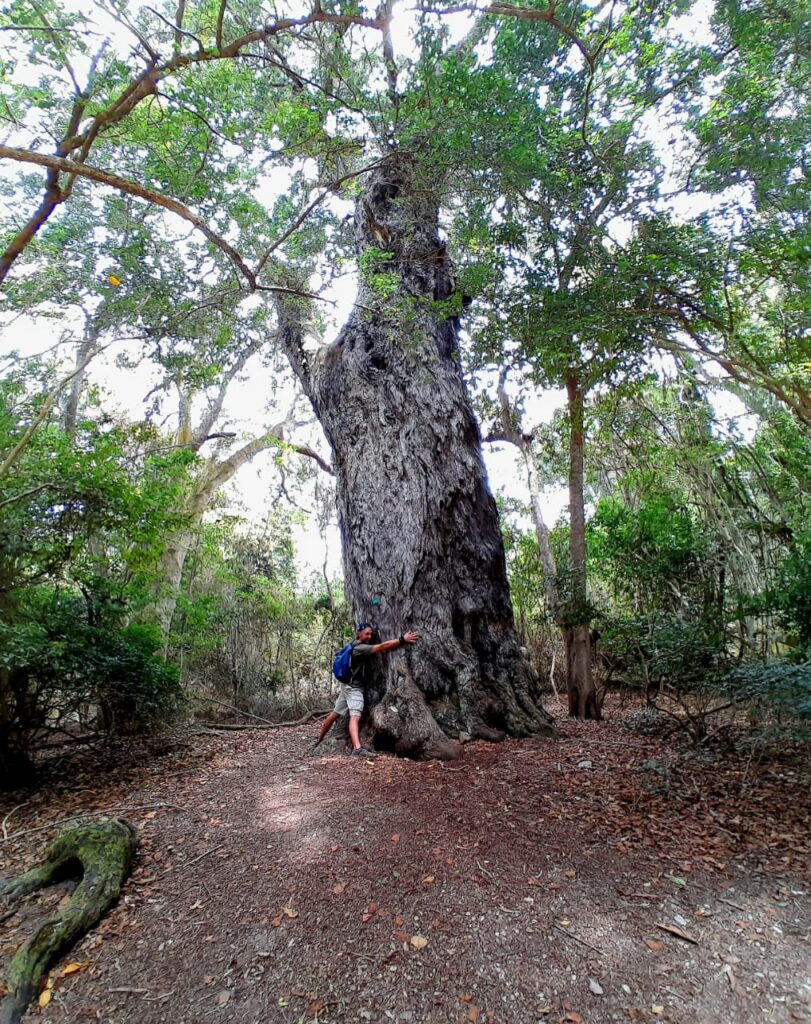
Kalandarkloof trail in Nature’s Valley.
Sentinel of the Forest: Outeniqua Yellowwood
(Afrocarpus falcatus)
If the Garden Route has a “King,” this is it. Seeing an Outeniqua yellowwood in person is a humbling experience – many of the giants you see along the trails were already hundreds of years old before the first ships even arrived in Plettenberg Bay.
🌲 Trail Facts
- The Sky-Scraper: These are the tallest trees in South Africa’s indigenous forests, reaching heights of up to 45 meters (about 15 stories!)
- A Thousand-Year Life: Some of the largest specimens in the Knysna and Tsitsikamma forests are estimated to be over 800 to 1,000 years old.
- The “Flaky” King: You can easily identify them by their bark, it peels off in distinctive rectangular flakes, exposing a smooth, yellowish underlayer.
Guide’s Tip: Look up into the canopy! The Outeniqua yellowwood provides a massive ecosystem for “Old Man’s Beard” lichen and rare birds like the Knysna Turaco (Loerie), who love to eat the fleshy yellow fruit the tree produces.

easy to spot.
Photo by David Siu.
The Jewels: The Knysna Turaco (Loerie)
(Tauraco corythaix)
You’ll likely hear the Knysna Loerie before you see it. Listen for its deep, croaking “kow-kow-kow” call echoing through the trees.
🦜 Trail Facts
- A Splash of Crimson: While they look emerald green when perched, their wings reveal a shock of brilliant crimson feathers when they fly.
- Forest Gardener: They play a vital role in the forest’s health by eating wild fruits (like those from the Yellowwood) and dispersing the seeds as they move.
- The Green Pigment: Unlike most birds that get their color from light refraction, the Turaco produces a unique pigment called Turacoverdin. It’s one of the only “true” green pigments found in the bird kingdom.
- The Crimson Pigment: Similarly, the red in their wings is caused by Turacin, a copper-based pigment.
Guide’s Tip: Watch the mid-canopy. They aren’t great long-distance fliers; instead, they “run” along branches and hop from tree to tree.
💡 Pro-Tip for Nature Lovers
To see our wildlife, you have to slow down. The forest doesn’t reveal its secrets to those who rush. If you sit quietly at the base of a Yellowwood for ten minutes, the forest will begin to “reset,” and the birds and smaller mammals will emerge.
Threats to the Southern Cape
Arguably the biggest threat to the area right now is the rapid coastal industrialisation taking place due to immigration/semigration. Semigration is a recent term highlighting the large number of wealthier South Africans moving to the Western Cape because of high unemployment, corruption, and deteriorating infrastructure in other parts of the country.
This naturally places strain on the limited resources available, particularly housing. Southern Cape Adventures is keeping a watchful eye on these development in the hopes of maintaining sustainable tourism.